Neuroscience
Why Do You Forget New Words So Quickly? The Science Behind Learning Vocabulary
July 28, 2026 · 6 min
Why Do You Forget New Words So Quickly? The Science Behind Learning Vocabulary
Have you ever learned a new Spanish word, used it confidently in class, and then completely forgotten it the next day?
If so, you’re not alone---and you’re certainly not failing.
One of the most frustrating moments I witness in my classroom is when a student suddenly can’t retrieve a word or sentence structure during a real conversation. They often apologize or assume they have a “bad memory.”
The truth is far more encouraging.
The problem isn’t your memory.
The problem is that your brain hasn’t had enough opportunities to build a strong retrieval pathway.
Your Brain Is Building New Connections
Many people believe that remembering vocabulary is simply a matter of repetition. While repetition has its place, cognitive science tells us that the act of retrieving information from memory is what actually strengthens it.
When you struggle to remember a word, your brain is searching for that new pathway. Every attempt to recall it---even unsuccessful ones---helps strengthen the connection. This process, known as active recall, creates memories that are more durable and easier to access later.
Instead of becoming discouraged, this is the perfect moment to reinforce learning.
What We Do in My Lessons
When a student forgets a word, we don’t simply move on or translate it immediately.
Instead, we revisit familiar sentence patterns and use guided questions to encourage active recall. Once the student regains confidence, we place the vocabulary into a conversation about something meaningful---an experience, a story, or a situation they are likely to encounter in everyday life.
Why?
Because attention is the gateway to learning. When students care about the conversation, their brains process information more deeply.
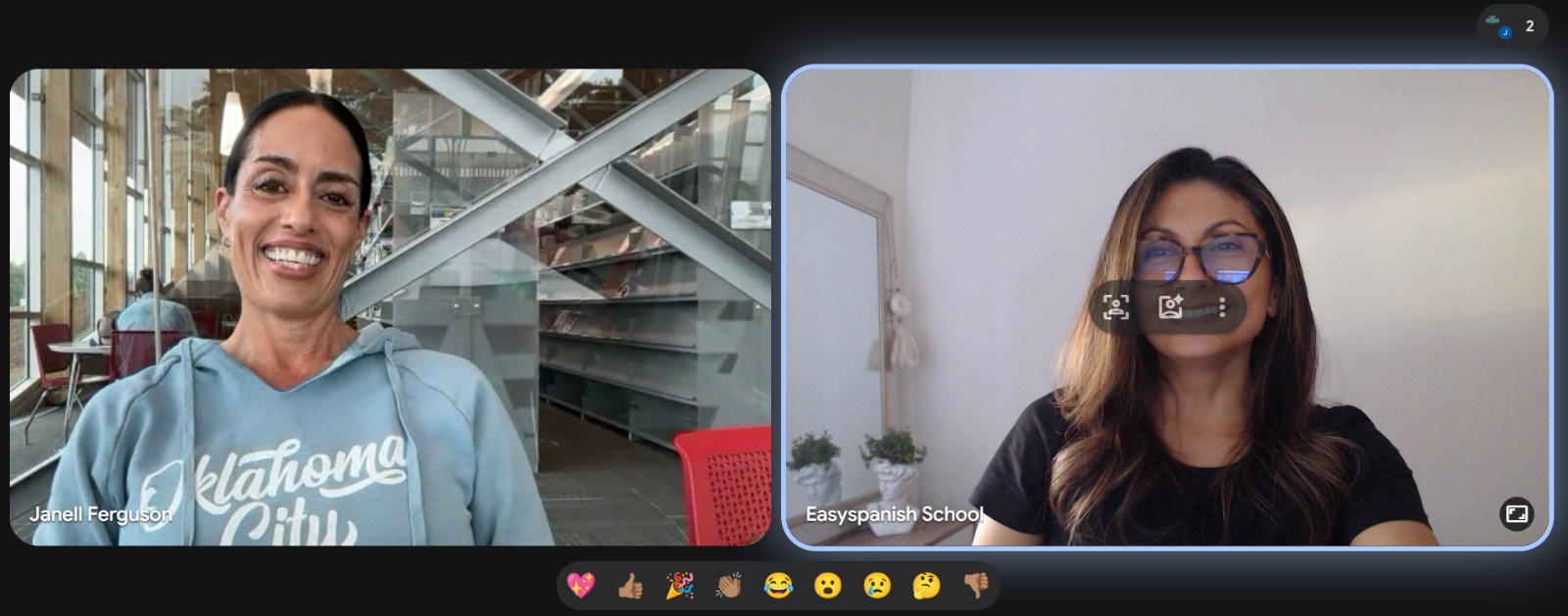
As the conversation continues, I encourage students to answer increasingly challenging questions in the chat box. They aren’t just listening---they are actively encoding and retrieving information by typing their answers.
I also prefer handwriting over typing whenever possible. Writing by hand slows the brain down just enough to promote deeper processing and stronger memory formation.
And yes, we laugh.
Humor, curiosity, and positive emotions reduce stress and create the ideal environment for learning. A relaxed brain learns far more effectively than a frustrated one.
The Learning Cycle
Most of my lessons are designed to guide students through a natural sequence of learning:
Exposure → Attention → Processing → Encoding → Consolidation → Active Recall → Real-World Transfer
This cycle transforms vocabulary from something you recognize into something you can actually use in spontaneous conversation.
So, How Many Times Does It Take?
There isn’t a magic number.
Every learner builds neural connections at a different pace. The goal isn’t endless repetition---it’s meaningful retrieval over time.
In my experience, students who complete four focused 30-minute sessions in one week often begin using new vocabulary naturally and confidently in real conversations. The difference isn’t simply the amount of practice; it’s how that practice is designed.
Learning a language isn’t about memorizing more words.
It’s about training your brain to find them exactly when you need them.
Ready to Experience This for Yourself?
If you’re tired of forgetting vocabulary the moment you need it, it’s time to try a different approach.
In a trial lesson, I’ll show you how the RRF Method helps students build lasting vocabulary through active recall, meaningful conversation, and brain-friendly learning strategies.
Don’t just study Spanish---train your brain to speak it.
Book your trial lesson today and discover how quickly your Spanish can become something you actually remember… and use.